

With the latest No Kings Protest just around the corner (of which I am proud to attend), I thought it might be timely and appropriate to research the history of protests. While I remember getting a POW bracelet during the Vietnam era, I don’t remember ever attending an actual protest until the Women’s March in 2017, despite having been raised in a liberal household. Apparently, we were liberal and staunch Democrats, but not the stereotypical hippies of old. I suppose my parents were just a touch too old at that point. That was certainly my loss; I would have liked to have been involved in the protests of the ’60s and ’70s. Anyhow…back to what I learned about protests of old.

- Protests date as far back as the 13th Century. In 1215, barons resented being subjects of such a powerful monarchy and launched an insurrection against King John. As a result, along came the Magna Carta which was an attempt to make peace, giving barons legal protection against arbitrary monarchical rule.
- The Peasant’s Revolt of 1381 was a result of the anger over the poll tax. Rebels, led by Wat Tyler, marched from Kent and Essex to London. The leaders even challenged the existence of the class system, and when the crowd assembled at Blackheath, a Lollard priest preached equality for all. The protests turned violent, and the Archbishop of Canterbury and key royal officials were killed. Unfortunately, the protest ultimately did little good as King Richard II reasserted the Crown’s control. Promises made were later reneged on, and Wat Tyler was killed, along with hundreds of others. However, as a result of the protest, feudalism was on its way out, and the plight of many peasants did improve.
- The challenge to the Catholic Church began with a protest in 1517. The German Augustinian friar Martin Luther became frustrated with the practice of sinners paying money for God’s forgiveness. The religious schism that followed the protests at the church’s door in Wittenberg was legendary.
- Many of us know all about the Boston Tea Party in 1773 when ‘No taxation without representation’ became a rallying cry of British colonists in North America from the 1750s onwards.
- The French Revolution from 1778 to 1799 was a turning point in the rise of democracy and freedom – not just in France, but across Europe and around the world.
- In 1812, the Luddites, who were textile artisans, were concerned with labor rights and the free market. The Industrial Revolution threatened a ‘race to the bottom’ by relying on less-skilled labor. Organizing collectively, they represent a big moment in the rise of the British labour movement.
- The fight for women, although protracted, started in the 18th Century, with women’s suffrage in Sweden. For New Zealand the movement resulted in women gaining the right to vote in 1893. In Britain, suffragettes were imprisoned and, when on hunger strike, force-fed. They resorted to protest and property damage. Then, in 1913, Emily Davison died by throwing herself under the king’s horse at the Epsom Derby. In 1918, women over 30 won some rights, but it was not until 1928 that women over 21 could vote.
- Of course, the Civil Rights movement had numerous well-known protests, and then there were protests over the war in Vietnam, kicking off modern-day protests that vary in size, scope, and purpose. The “Me Too” movement and “Black Lives Matter” are two very notable modern-day protests with enormous impact. And let’s not forget the Stonewall Riots, widely known as the event that kicked off advocacy for LGBTQ+ rights.
- According to historians and political scientists who study protest, protest has led to the passage of legislation that gave women the right to vote, banned segregation, and legalized same-sex marriage. Research confirms that the Women’s March incited tangible change. In particular, it directly prompted a surge in the number of female candidates. During the 2018 midterms, more than 500 women ran in congressional races, nearly doubling the numbers from 2016. Additionally, according to one study, regions with higher protest turnout saw positive shifts in county-level votes for Democratic candidates. Another study found that voters were more likely to support women and candidates of color because of the empowering effect of the protest. Finally, there is the “3.5% rule,” developed by political scientists Erica Chenoweth and Maria Stephan, who researched civil resistance campaigns from 1900 to 2006. If 3.5% of a population protests against a regime, the regime will fail.
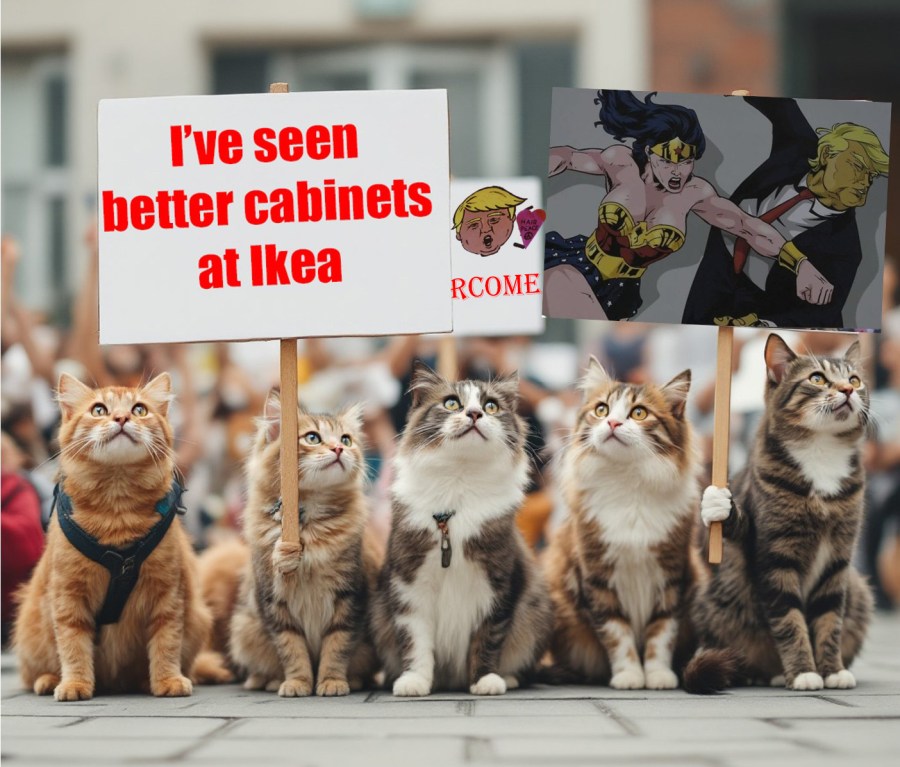
So, yeah, I will proudly stand with others to make my voice heard because history shows us that our voices do matter! Besides writing books that sneak in social commentary, giving money to causes I support, and voting, I can find no other way to let my voice be heard. Those who follow me know that I often include political messaging in my books. For some, that may be off-putting; for others, I hope you applaud my efforts to include that social commentary. I encourage you to check out my books to get a sampling of what’s important to me! My latest book, which goes live on April 1st, A Moment in Time, definitely has a lot of messaging, but gives us hope that things will turn a corner. I like to envision a better world for the future, even if I won’t be around to see it!
A Moment in Time – On Pre-order
Protect the timeline. Guard the woman. Don’t fall in love!
Click the cover below for purchase options
The Invisible Woman: A Lesbian Superhero Story
Click the covers below for purchase options


Listen to a clip:
Trouble in Paradise – Trophy Wives Club Book 4
Click the cover below for purchase options

Listen to Audio Clip Below
The Kitten Trap
Click the covers for purchase options


Listen to Audio Clip Below
The Love Demand
Click the covers for purchase links!


Pleasure Workers in Audio

Love Sins – The Final Chapter in The Organization Universe
Click on Cover for purchase links and description


The Final Chapter in the original Organization series is now in Audible

Catch up with Books 1 and 2 in The Next Generation Series




Where it all began….
Click on Covers for purchase links and descriptions

Click on Covers for purchase links and descriptions


Books in Audible
Books In Kindle Unlimited (KU)

Subscribe To Annette’s Substack
Proud to be an Affinity Rainbow Pub
 Annette Mori